 AFI
AFI
Gutena Forms
Gutena Forms is a lightweight form block for the WordPress block editor. Connect it to Advanced Form Integration (AFI) and every submission is passed to the platforms you choose. You can log entries in Google Sheets, add subscribers to Mailchimp, or push new leads into a CRM without writing any code.
What You’ll Need
- The Gutena Forms plugin installed and active, with at least one form added to a published page or post.
- Advanced Form Integration, free or Pro. This trigger works fully in the free version.
- An account on the receiving platform, such as Google Sheets or Mailchimp.
How to Create the Integration
- Go to AFI > Add New in your WordPress dashboard.
- A default Integration Title is filled in automatically. Rename it to something recognizable, like “Gutena Newsletter Form to Mailchimp”.
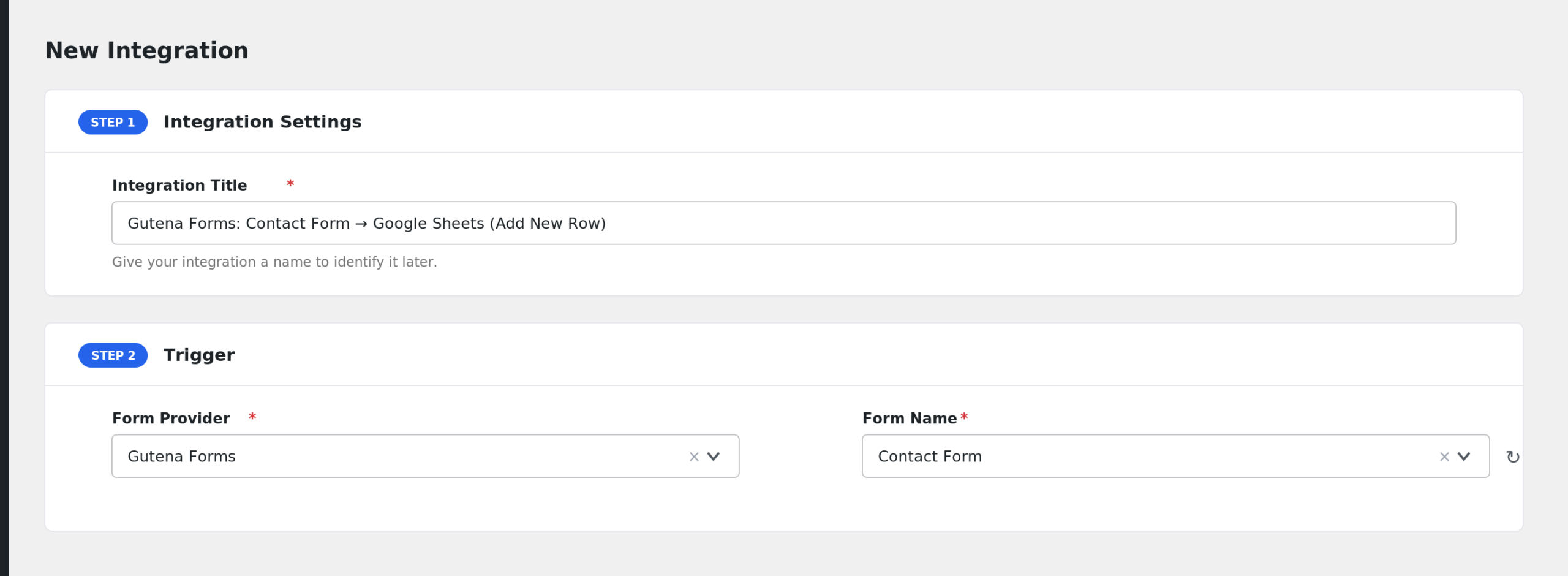
- Under Trigger, open the Form Provider dropdown and select Gutena Forms. The Gutena Forms plugin must be active or the option will not appear.
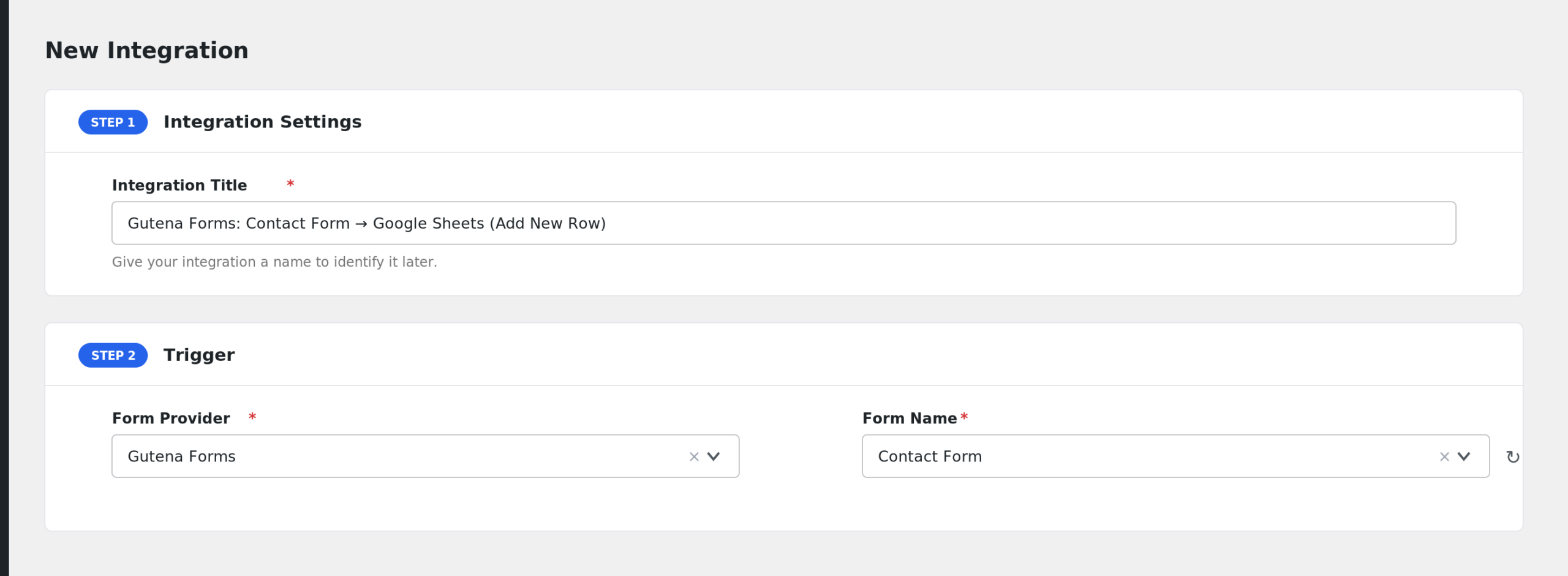
- Pick your form in the Form/Task Name dropdown. AFI lists every saved Gutena form by its form name.
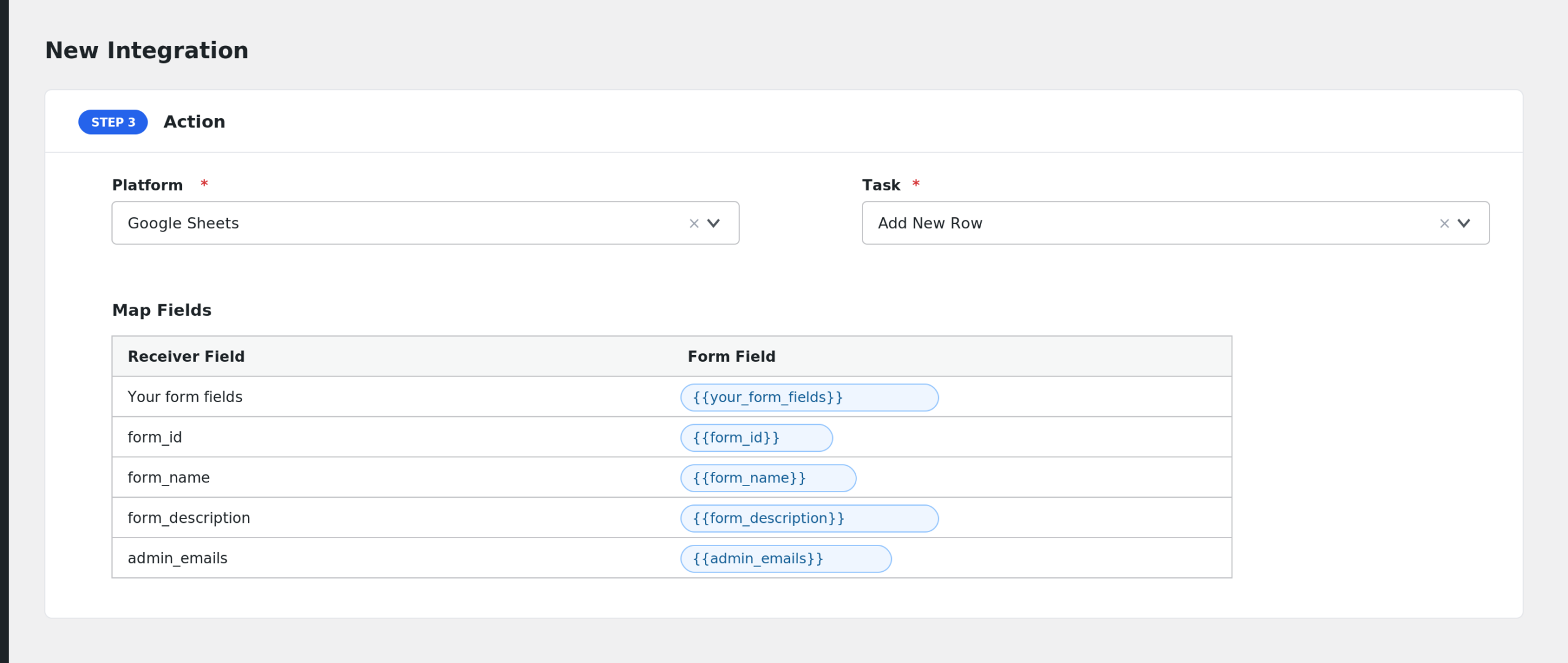
- Under Action, select the receiver platform and connect your account.
- Map the Gutena fields to the receiver fields using the tag picker next to each receiver field.
- Click Save Integration and send a test submission.
Fields You Can Send
AFI reads the form schema saved by Gutena Forms. Each of your fields appears three times: the formatted value, the field label, and the raw value. Opt-in checkboxes are excluded. These extra fields are also available:
| Field | Description |
|---|---|
| Your form fields | Each Gutena field by name, plus a “(Label)” and a “(Raw Value)” variant. |
| form_id | The block form ID. |
| form_name | The name of the form. |
| form_description | The form description set in the block. |
| admin_emails | Admin notification emails, comma separated. |
| email_subject | The admin email subject line. |
| reply_to_email | The reply-to email configured on the form. |
| reply_to_first_name | The reply-to first name. |
| reply_to_last_name | The reply-to last name. |
| submission_timestamp | Unix timestamp of the submission. |
| submission_datetime | Submission date and time in ISO format. |
| submission_timezone | The site timezone. |
| submission_payload_json | The full submission as a JSON string. |
| submission_field_count | How many fields were submitted. |
Multi-value answers are joined into one comma separated string. General special tags such as user and post data also appear in the dropdown.
Conditional Logic Example
If your Gutena form has a dropdown field named plan, you can add a condition so the integration runs only when plan equals Premium. Free signups stay in WordPress while premium leads go to your CRM. Conditional logic is an AFI Pro feature.
Troubleshooting
Gutena Forms is not in the Form Provider list
Make sure the Gutena Forms plugin is active. AFI hides providers whose plugin is not detected.
My form is missing from the dropdown
AFI reads the saved form schema. Open the page containing the form and click Update so Gutena stores the schema, then reload the AFI screen.
The integration is not firing
AFI hooks into the Gutena Forms submission event on the server. Confirm the form submits successfully on the front end, then open AFI > Log to check whether the trigger fired and what the receiver returned.
Fields arrive blank
If you added or renamed fields after creating the integration, the saved mapping may point to old field keys. Edit the integration, reselect the form, and remap the fields.